INNOVATION
Inside KROHNE's New AI Watchdog for Pipelines
KROHNE's PipePatrol NEO blends AI and physics-based models to catch leaks, theft, and anomalies across global pipelines
24 Jul 2026
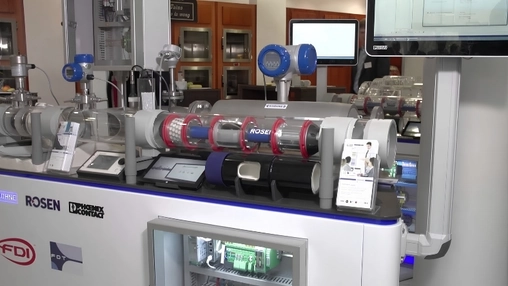
Pipelines leak. Sometimes by accident, sometimes because someone taps them deliberately. On 7 July 2026, KROHNE released a tool meant to catch both: PipePatrol NEO, an AI monitoring platform now running on more than 350 pipelines worldwide.
The system pairs what KROHNE calls Neural Engine Pipeline Monitoring with older physics-based modelling. Neither approach alone has proven reliable. Pure data-driven models can be fooled by noisy sensors; pure physical models struggle with the messiness of real pipelines, where temperature, pressure and flow rarely behave as textbooks suggest. Combining the two is meant to close that gap, though whether it does so reliably across years of operation, rather than in a launch demonstration, remains to be tested.
Regulation, more than physics, seems to be the immediate driver. Maximilian Ihring, KROHNE's Global Sales Support Manager and Sales Manager Europe, and Daniel Vogt, Global Business Unit Manager for PipePatrol, both pointed to tightening rules and changing pipeline demands as forces behind the product. Regulators in Europe, North America and Asia-Pacific are asking for faster incident response and more transparency. Operators of older infrastructure, in particular, face pressure to upgrade monitoring without ripping out entire systems. PipePatrol NEO is built to bolt onto existing setups rather than replace them, which lowers the cost of adoption if not necessarily the cost of the underlying problem.
Also, the platform's reach extends beyond oil and gas. Chemical, water and hydrogen networks now run the same tool, a sign that pipeline risk is no longer viewed as a fossil-fuel problem alone. Water systems face growing strain from climate volatility; hydrogen networks are expanding fast, often without the decades of operational data that oil and gas firms have accumulated. Applying one monitoring platform across such different infrastructures is convenient for KROHNE. Whether the underlying risks are similar enough to justify one system is a separate question, and one operators will answer only after years of live data, not at launch.
For now, the appeal is straightforward: catch leaks and theft faster, satisfy regulators, and do it without tearing out what already works. Whether that promise holds under a decade of real-world wear is the test that matters, and it is one no launch event can settle.
Related News


topics on the agenda
BUILDING THE ONE: EMPOWERING PIPELINE INTEGRITY AND COMPLIANCE WITH GEOSPATIAL DATA
Day 1: WEDNESDAY, SEPTEMBER 9, 2026
09:40 - 10:05
PANEL DISCUSSION ON THE TRANSFORMATIVE ROLE OF DIGITALIZATION AND AUTOMATION IN THE PIPELINE INDUSTRY
Day 1: WEDNESDAY, SEPTEMBER 9, 2026
11:00 - 11:30
LARGE AREA GUIDED WAVE MONITORING FOR REAL-TIME PIPELINE INTEGRITY MANAGEMENT
Day 1: WEDNESDAY, SEPTEMBER 9, 2026
11:30 - 11:55
SUBSCRIBE FOR UPDATES
By submitting, you agree to receive email communications from the event organizers, including upcoming promotions and discounted tickets, news, and access to related events.