RESEARCH
From Gut Feel to Data: ML Reshapes Pipeline Risk
A sweeping review of 95 studies confirms machine learning is fundamentally changing how engineers design, monitor, and maintain pipelines
19 Jun 2026
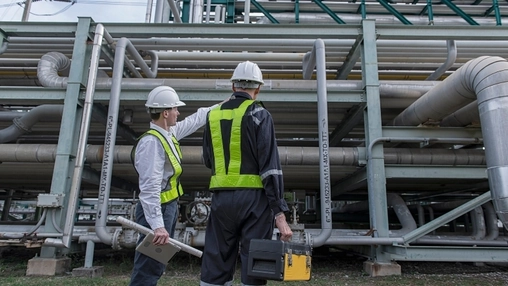
Machine Learning Is Rewriting the Pipeline Playbook
Pipeline engineering has long been a discipline of calculation and caution. A sweeping review published in the Journal of Pipeline Science and Engineering suggests it is becoming something else entirely: a data science problem.
Consolidating findings from 95 core studies, the research maps ML's rapid evolution across reliability-based design, condition monitoring, and maintenance planning. Early adoption leaned heavily on supervised learning, training models on labeled failure datasets to predict corrosion, cracking, and pressure anomalies. Hybrid approaches have since taken over, blending supervised and unsupervised techniques with physics-based models to tackle problems neither methodology could solve alone.
The commercial stakes are hard to overstate. Unplanned outages and integrity failures cost the energy and utilities sectors billions annually. Deploying ML-driven inspection and monitoring lets operators abandon costly calendar-based maintenance cycles in favor of dynamic, data-informed decisions that reduce downtime and extend asset life. Predictive maintenance, in this context, is as much a financial instrument as an engineering one.
Downstream benefits ripple further than the control room. Smarter pipeline management reduces supply disruptions and lowers the environmental risks tied to leaks or ruptures. Reviewing 95 studies simultaneously gives researchers the statistical weight to identify which ML architectures perform best under real field conditions, and that clarity is accelerating adoption. Procurement teams and engineers now have a roadmap, not just a hypothesis.
As sensor networks grow denser and computational power increases, ML models will ingest richer real-time data streams, pushing predictive accuracy higher still. Researchers anticipate next-generation hybrid frameworks will eventually support autonomous integrity assessments, dramatically compressing the gap between anomaly detection and remedial action. For pipeline infrastructure worldwide, the most data-intensive era in its history is just getting started.
Related News


topics on the agenda
BUILDING THE ONE: EMPOWERING PIPELINE INTEGRITY AND COMPLIANCE WITH GEOSPATIAL DATA
Day 1: WEDNESDAY, SEPTEMBER 9, 2026
09:40 - 10:05
PANEL DISCUSSION ON THE TRANSFORMATIVE ROLE OF DIGITALIZATION AND AUTOMATION IN THE PIPELINE INDUSTRY
Day 1: WEDNESDAY, SEPTEMBER 9, 2026
11:00 - 11:30
LARGE AREA GUIDED WAVE MONITORING FOR REAL-TIME PIPELINE INTEGRITY MANAGEMENT
Day 1: WEDNESDAY, SEPTEMBER 9, 2026
11:30 - 11:55
SUBSCRIBE FOR UPDATES
By submitting, you agree to receive email communications from the event organizers, including upcoming promotions and discounted tickets, news, and access to related events.