INNOVATION
AI Now Watches Pipelines Better Than Humans Ever Did
Machine learning and distributed sensing are converging to overhaul pipeline monitoring, slashing false alarms to a mere fraction of old rates.
10 Jul 2026
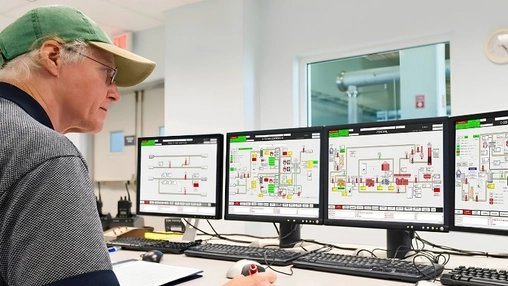
Old pipeline alarms cried wolf so often that operators learned to ignore them. SCADA systems, the industry's decades-old workhorse, flag false positives up to 94% of the time. Such noise breeds complacency, and complacency is precisely what pipeline safety cannot afford.
A newer approach is proving harder to dismiss. According to documentation published in April 2026, iFactory's multi-sensor fusion technology brought that false-positive rate down to 2%. Behind the number sits a broader shift: firms are combining machine learning with networks of physical sensors, rather than patching old detection code.
Two vendors illustrate the pattern differently. Emerson pairs its Pipeline Manager software, which relies on real-time transient modelling, with the Rosemount 928, a wireless gas monitor. The combination lets simulated hydraulics meet field-level readings in one detection layer. Baker Hughes took a further step: its Cordant platform links digital twins directly to sensing hardware, watching for anomalies continuously across sprawling networks rather than checking in at intervals.
March 2026 analysis from ARC Advisory frames this convergence, not incremental upgrades to single tools, as the real source of competitive advantage among vendors. That distinction is not cosmetic. A vendor selling one clever sensor competes on features; a vendor selling an integrated ecosystem competes on trust, and trust is what SCADA-era systems spent decades eroding.
For operators, better detection carries plain financial logic. Fewer false alarms mean fewer wasted dispatches. Faster, more accurate leak detection lowers environmental liability and unplanned downtime, while also easing the path through regulatory compliance. None of this guarantees smooth adoption; new platforms still require capital, training and trust-building of their own before they replace instincts built over a generation of false alarms.
Yet the direction looks set. As interoperability between platforms improves, predictive integrity management, once a pilot-stage curiosity, edges toward becoming standard infrastructure. Consumers, largely unaware of the sensors beneath their feet, stand to gain a marginally safer energy supply as a result.
Related News


topics on the agenda
BUILDING THE ONE: EMPOWERING PIPELINE INTEGRITY AND COMPLIANCE WITH GEOSPATIAL DATA
Day 1: WEDNESDAY, SEPTEMBER 9, 2026
09:40 - 10:05
PANEL DISCUSSION ON THE TRANSFORMATIVE ROLE OF DIGITALIZATION AND AUTOMATION IN THE PIPELINE INDUSTRY
Day 1: WEDNESDAY, SEPTEMBER 9, 2026
11:00 - 11:30
LARGE AREA GUIDED WAVE MONITORING FOR REAL-TIME PIPELINE INTEGRITY MANAGEMENT
Day 1: WEDNESDAY, SEPTEMBER 9, 2026
11:30 - 11:55
SUBSCRIBE FOR UPDATES
By submitting, you agree to receive email communications from the event organizers, including upcoming promotions and discounted tickets, news, and access to related events.